What is BPC-157?
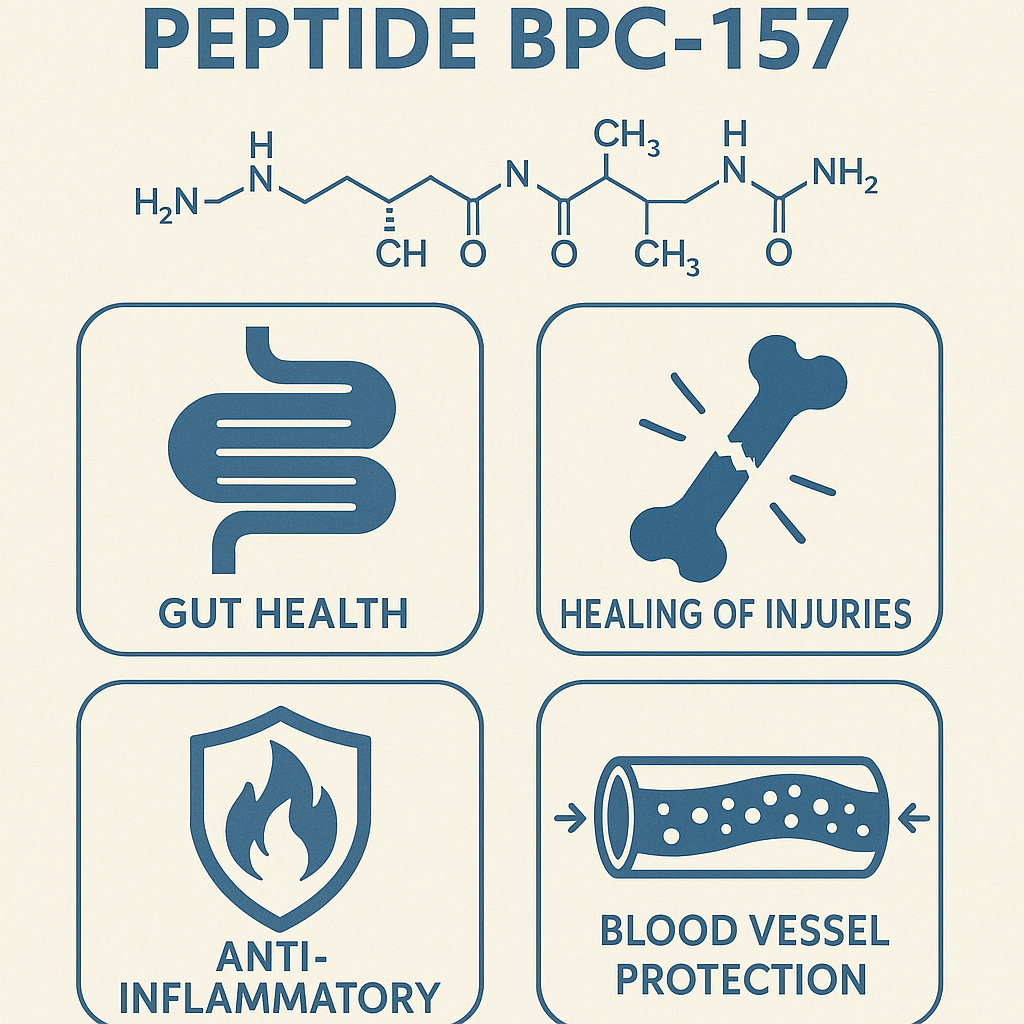
BPC-157, or Body Protection Compound-157, is a synthetic peptide derived from a natural set of amino acids found in human gastric (stomach lining) juice. It consists of 15 amino acids and is naturally associated with protective and regenerative processes in the human body. Its discovery stemmed from research into the stomach lining’s natural ability to resist injury and heal from ulcers, revealing a wide range of therapeutic benefits. BPC-157 is not limited to gastrointestinal health; it demonstrates systemic effects that aid in tissue repair, inflammation reduction, and healing acceleration. Clinical and anecdotal evidence strongly support its efficacy in promoting recovery from injuries and managing chronic conditions.
How does peptide BPC-157 work?
BPC-157 works by forming new blood vessels within the body. This process is called angiogenesis and is important in promoting healing and faster cell regeneration. Angiogenesis is the process of new capillaries forming out of preexisting blood vessels in your body. It’s normally a helpful, important process that supports wound healing and supplies oxygen-rich blood to your organs and tissues.
What are the benefits of BPC-157?
- Wound and tissue healing
- Soft tissue injuries and wounds refer to damage to the muscles, tendons, and ligaments of the body. They can be partial or complete tears and in extreme cases may require surgical repair. Interestingly, BPC-157 has shown promise in scientific studies for promoting the healing of tendon-to-bone damage.
- Improves bone and joint health
- Improves digestive health
- Lowers blood pressure
- Muscle recovery
- BPC-157 is anabolic peptide meaning it increases muscle hypertrophy and strength. while decreasing adipose tissue
- Pain reduction
- Reduction in fat mass
- While increasing muscle hypertrophy, BPC-157 actually decreases adipose fat tissue in the body.
- Anti-aging
- BPC-157 has been observed to stimulate collagen synthesis.
Side effects associated with peptide BPC-157 may include the following:
- Changes in blood pressure
- Changes in heart rhythm
- Dizziness
- Fatigue
- Hot flashes
- Nausea and vomiting
A small risk to those intending to supplement with BPC-157 is its lowering of blood pressure. Those already on one or more blood pressure medications should recognize that blood pressure can drop even further if taking this peptide leading to bouts of intense dizziness.
The most severe risk to using peptide BPC-157 is the effect it has on cancer patients or those who may be unaware that they have a tumor. BPC-157 is a growth agent and as such it may potentially cause tissue proliferation similar to growth hormone. It has been theorized that if an individual receives a cancer diagnosis, administering BPC 157 could potentially exacerbate their condition.
How to take BPC-157?
BPC-157 is one of the unique peptides that can be taken both subcutaneously and orally.
Dosage of peptide BPC-157:
The dosages of BPC-157 differ whether you take the peptide orally or subcutaneously. The dosage of BPC-157 can also vary depending on the individual and the condition being treated. A typical dosage range is 200-800 micrograms (mcg) per day. This can be taken as a single dose or divided into two or more doses.
- Subcutaneously:
- A dosage of 400–600 mcg/day has proven to be effective when administered via subcutaneous injection in close proximity to the affected region. The dose can be taken twice a day or all in one shot depending on the individual.
- Oral
- For oral administration of BPC-157, the dose is typically 500 mcg per dose, twice a day. The capsules can be taken with or without food.
An official therapeutic dosage for BPC 157 has not been established by a medical authority, as it is not currently FDA-approved.
Scientific studies such as: Stable Gastric Pentadecapeptide BPC 157 as a Therapy and Safety Key feel confident in the peptide having a high safety net and beneficial effects.

 Slim Science Peptides
Leave a comment