The SS-31 peptide is a small, mitochondria-targeting peptide specifically designed to protect and improve the function of mitochondria. This peptide’s function is very similar to that of MOTS-C and in fact can be taken in conjuction with that peptide to really enhance the effects of both.
This peptide has gained attention in the scientific and medical communities for its potential role in treating various age-related and degenerative diseases. Since mitochondrial dysfunction is linked to many chronic illnesses and the aging process, SS-31’s role in scientific studies has sparked interest for its potential to both restore cellular energy and combat diseases at the cellular level.
What is the purpose of Mitochondria?
Mitochondria are essential for producing energy in cells through a process known as oxidative phosphorylation. Oxidative phosphorylation is a metabolic process that occurs in the mitochondria, where ATP is generated. ATP stands for Adenosine Triphosphate and is the primary energy carrier in all living cells. As we age or develop certain diseases, mitochondria can become less efficient, leading to oxidative stress and damage to cellular structures. This damage can result in various health issues, from muscle weakness to neurodegenerative diseases.
What does SS-31 aim to accomplish?
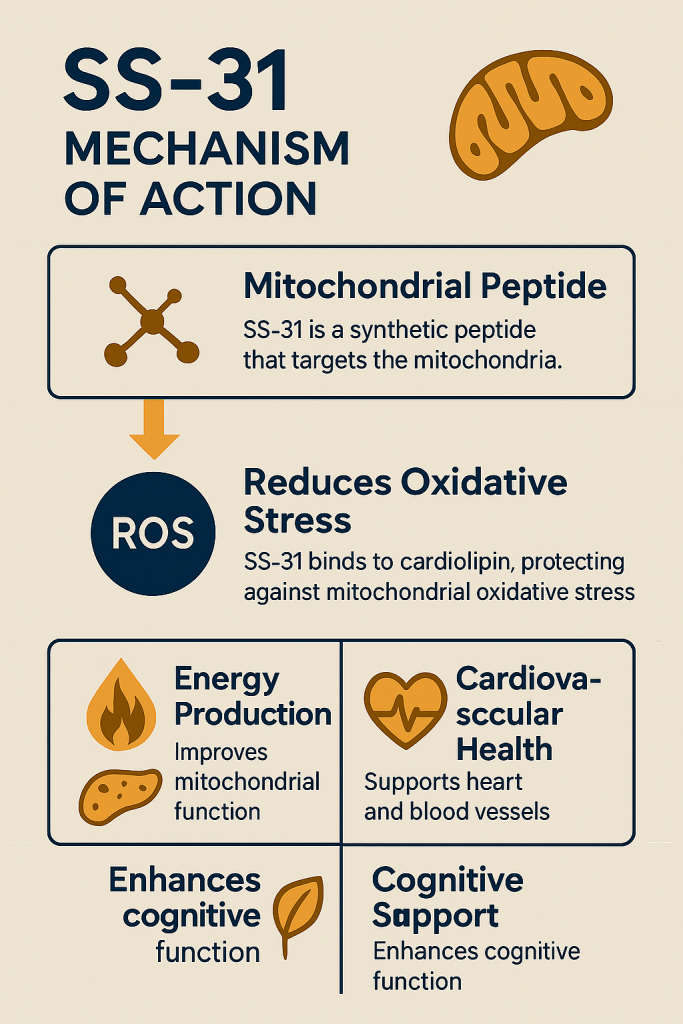
SS-31 directly interacts with cardiolipin. Cardiolipins are important components of the inner mitochondrial membrane and play an essential role in maintaining mitochondrial structure and function. When mitochondria are stressed or damaged, cardiolipin can become dysfunctional. The SS-31 peptide attaches itself to cardiolipin to help stabilize it and thus protects the mitochondria from further cellular damage. This stabilization process improves mitochondrial efficiency, reduces oxidative stress, and enhances energy production of the cell.
Another benefit of SS-31 is that it helps reduce the production of reactive oxygen species. Reactive Oxygen Species (ROS) are highly reactive molecules derived from oxygen that play crucial roles in cellular processes but can also cause oxidative stress. ROS can become harmful molecules and can contribute to inflammation and cellular damage.
Potential Benefits of the SS-31 Peptide:
- Improved Muscle Function
- In scientific studies, the SS-31 peptide has been shown to enhance muscle function. This has been particularly seen in older adults or those with muscle-related diseases. By improving a person’s mitochondrial efficiency, SS-31 may help increase muscle strength and endurance, potentially benefiting conditions like sarcopenia (age-related muscle loss) and muscular dystrophies.
- Neuroprotection
- Since mitochondrial dysfunction is linked to neurodegenerative diseases such as Alzheimer’s and Parkinson’s, the SS-31 peptide’s ability to stabilize mitochondria may offer neuroprotective effects. Early research suggests that SS-31 supplementation may help protect brain cells from oxidative damage. In theory, this could reduce inflammation of the brain and could slow down the progression of neurodegenerative diseases.
- Cardiovascular Health
- SS-31 may also have potential benefits for heart health. By protecting mitochondria in cardiac cells, SS-31 could help prevent damage to the heart and improve its function. This could lead to enhanced function during both strength and cardio training, allowing longer training periods and less time needed for recovery.
- Anti-Aging Properties
- By improving mitochondrial function and reducing oxidative stress, the SS-31 peptide could help slow the aging process at the cellular level by promoting healthier aging of the cells and potentially extending the lifespan of the subject.
- Increased energy levels
- Just like the MOTS-C peptide, the SS-31 peptide boosts energy by targeting and protecting mitochondria. As we age or experience stress, mitochondrial efficiency declines, leading to fatigue and reduced cellular energy. SS-31 works by stabilizing the mitochondria, preventing oxidative damage, and improving ATP production. This results in increased cellular efficiency, allowing the subject to feel more energized.
Potential Side Effects:
- Mild Headaches or Lightheadedness
- Some users report slight headaches, possibly due to changes in cellular energy metabolism. This side effect is common for all peptide injections.
- Injection Site Irritation
- Redness, swelling, or tenderness can occur where the peptide is injected. Rotating injection sites and using proper sterile technique helps reduce this. This is another side effect common for almost all possible peptide injections.
- Temporary Fatigue
- A small, initial dip in energy might occur if your body is adjusting to changes in mitochondrial function. Additional dosage adjustments may help alleviate fatigue.
- Rare but Serious Issues
- Severe swelling, allergic-like reactions, or heart palpitations could possibly occur in the rarest of cases. Stop use and seek medical assistance immediately is such an occurrence takes place.
Possible Dosage:
The exact dosage of the SS-31 peptide can vary depending on what the subject is looking to accomplish, the severity of their mitochondrial dysfunction, and the individual’s response to the peptide. While there is no standardized dosage established, typical dosing regimens range from 0.5 to 10 milligrams (mg) per day, administered via subcutaneous injection. Treatment duration may also vary depending on the individual and the extent of their mitochondrial dysfunction and desired therapeutic outcomes.
Additional information concerning this peptide can be found in this scientific study: CLICK HERE
 Slim Science Peptides
Leave a comment