What is AOD-9604?
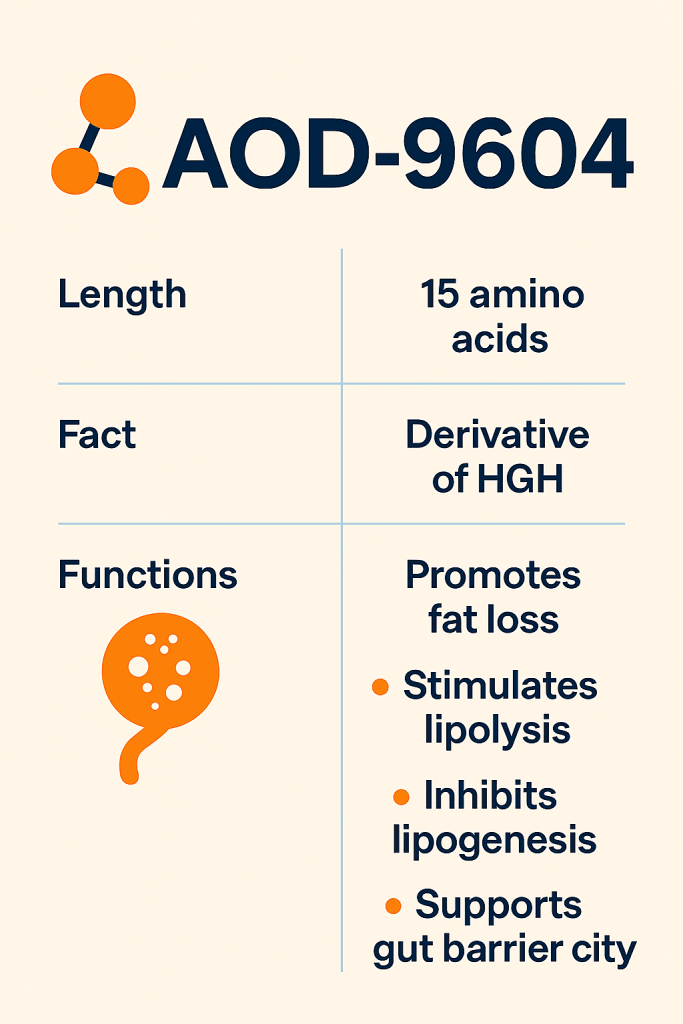
AOD-9604 is a modified fragment of human growth hormone (HGH), specifically derived from amino acids. It was developed to isolate the fat-burning effects of HGH while avoiding its unwanted side effects, such as excessive glucose metabolism and cellular proliferation. Unlike HGH, AOD-9604 does not activate the IGF-1 pathway, which is linked to tissue growth and potential carcinogenesis. This makes AOD-9604 a safer option for fat metabolism.
How AOD-9604 Works:
- Lipolysis Stimulation (Fat Breakdown): AOD-9604 activates beta-3 adrenergic receptors (these are located mainly in adipose tissue and are involved in the regulation of lipolysis and thermogenesis), enhancing lipolysis and the breakdown of fat cells. This process reduces adipose tissue, particularly in stubborn areas such as the abdomen and thighs.
- Lipogenesis Inhibition (Fat Formation): The peptide also inhibits lipogenesis, preventing the formation of new fat cells. By reducing adipocyte activity, AOD-9604 helps maintain long-term fat loss. Adipocytes are dynamic cells that play a crucial role in the body’s energy balance and metabolic processes. They are involved in various activities to include Hormone Secretion, Thermogenesis, Energy Storage and Energy Expenditure.
- Cartilage Regeneration and Tissue Repair: AOD-9604 supports cellular repair and regeneration by promoting anti-inflammatory pathways and collagen synthesis. This makes it a valuable tool for managing osteoarthritis, cartilage damage, and connective tissue injuries.
- No Systemic Effects on Glucose Metabolism: Unlike HGH, AOD-9604 does not affect insulin or glucose levels, making it a safe option for individuals with metabolic conditions such as type 2 diabetes or insulin resistance.
What is AOD -9604 used for?
- Weight Loss and Fat Reduction
- AOD-9604 effectively targets stubborn fat deposits, particularly in the abdominal region. This makes it an excellent adjunct therapy for patients struggling with localized fat despite maintaining a healthy diet and exercise regimen. Unlike invasive procedures such as liposuction, AOD-9604 offers a non-surgical alternative for body contouring.
- Metabolic Syndrome
- For patients with metabolic syndrome, AOD-9604 addresses key components such as abdominal obesity and insulin resistance. Its ability to improve body composition without impacting blood sugar levels ensures safety in this population.
- Cartilage and Joint Repair
- AOD-9604’s regenerative properties make it ideal for patients with degenerative joint diseases such as osteoarthritis. By stimulating cartilage repair and reducing inflammation, it improves joint function and alleviates pain.
- Post-Surgical Recovery
- Patients recovering from musculoskeletal or orthopedic surgeries benefit from AOD-9604’s ability to accelerate healing, reduce inflammation, and enhance tissue repair. This minimizes recovery time and improves overall outcomes.
- Athletic Performance and Body Composition
- Athletes and fitness enthusiasts use AOD-9604 to enhance muscle-to-fat ratio and reduce recovery time after intense physical activity or injury. By targeting fat reduction and supporting tissue repair, it contributes to a leaner, more functional physique.
Risks of AOD-9604:
- Mild Side Effects: Patients may experience headaches, nausea, or fatigue, which are generally mild and transient.
- Injection Site Reactions: Subcutaneous administration can cause redness, swelling, or irritation at the injection site.
- Limited Long-Term Data: While the short-term safety profile is strong, more studies are needed to establish its long-term effects.
Dosing Guidelines for AOD-9604:
- For Weight Loss it is recommended:
- 200–300 micrograms subcutaneously daily, typically in the morning.
- For Joint and Tissue Repair it is recommended:
- 250–500 micrograms subcutaneously daily or every other day.
- For Post-Surgical Recovery it is recommended:
- 300–500 micrograms daily for 4–6 weeks.
These dosages can be found in several online scientific studies.
For one such study: CLICK HERE
Duration of Therapy:
Most protocols last 4–12 weeks, depending on patient goals and clinical response. For long-term use, periodic evaluations are necessary to adjust dosing and ensure safety.
 Slim Science Peptides
Leave a comment